Posts

Showing posts with the label Teachers

Indigenous Mathematicians and Scientists

When this resource was posted to Twitter a few weeks ago, it was shared quite a bit, so perhaps it needed a "home." Thank you to those of you who have shared stories and profiles of people who were not initially on this list - they have since been added. If students are to be successful in learning and exploring math, they need to believe in their intrinsic ability to think mathematically, an ability we ALL have. Part of this self-confidence develops (or is reinforced) when students can "see themselves" in others who have made great strides in maths and sciences, or who have made impactful contributions to their field. For many reasons, Indigenous learners are not often able to see themselves in that light in math and science. The following is the beginning of a list of Indigenous role models in mathematics and science, along with images and links to learn more about them and their work. The emphasis is on those residing/studying in Canada, however the list is ...
First Week of Math: Resources to help make connections & build relationships

This post was featured in an episode of  This Week in Ontario Edublogs (Sept. 4, 2019), beginning at 35:54 . In Ontario, students need a minimum of three math credits to graduate high school, one of which must be at the grade 11 or 12 level. For students who are not pursuing a post-secondary path that requires mathematics, and/or who really struggle with math, the grade 11 college-pathway math course (MBF3C) is often the last mandatory math course they need to take to graduate. Teachers of this course face several challenges, such as the range of student abilities, range of student interest (particularly if a student is only in the course because they need it to graduate), and also the wide variety of topics in the course curriculum. Last year, we offered new support for MBF3C teachers in our board. At our first session with the teachers, we had round-table discussions on what they most wanted in the way of resources to help their stude nts succeed.  One of the...

Three Words I'm Eliminating from my Math Vocabulary

Image
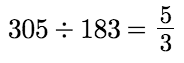
Before we begin, take a moment and read the number sentence below out loud . Don't think about it too much, just read it as you normally would to a class or colleague. On Language This past year, I have been doing more work in looking at how aspects of literacy creep into (and affect) how we teach and learn math. One theme that reoccured in different contexts was language, and paying close attention to what we say when we are teaching math. Over time, many of us adopt "shortcuts" when it comes to talking about the symbolic representation of mathematics. We may know what we mean to say, but for students who struggle, the meanings of these shortcuts are not always apparent, and might even cause confusion. The following are three very small, deliberate changes in language I am trying to work into my practice moving forward. Though each is a simple change, I'm having a hard time undoing decades of bad habits! "Equals" Based on some of our work on...

When a Drawing is Not Just a Drawing

Image
One of my biggest learnings in my role as a board co-ordinator has been around mental math in elementary schools. To be honest, when I first heard the term, I assumed mental math had to do with memorization and just learning multiplication facts.  I now know it to be a procedure very rich in strategy, promoting flexibility of number, and the very important mathematical process  of representing  a problem. Being able to see the math not only contributes to the understanding of the question at hand, but also to assessing the reasonableness of the answer. Visualization and representation of mathematics does not come easily to me - I was the student who became good at math by memorizing procedures. I still have to put a lot of effort into picturing multiplication in an array or area model, or picturing factorization by splitting items into groups, or picturing what happens to fractions as they are operated upon. This past week, I had the opportunity to model the a...

Activating Math Schema

In addition to working with grade K-5 teams on numeracy collaborative inquiries this year, I have been fortunate enough to also participate in literacy collaborative inquiries when they happen on the same days. I have very little literacy background, so I'm learning tonnes! I find it very exciting to see and hear how our students are learning, particularly in ways I've never stopped to consider. Earlier this year, I met with a group of grade K-3 teachers as they explored students' ability to predict what might happen in a story. Starting in Kindergarten, the teachers introduced a book to the students by showing them the cover, and then worked with students to access three factors in order to make predictions: they look at the picture on the cover, they consider the title, and they activate their schema . Aside...  Schema (SKEE-mah): relevant background knowledge, experience, or prior knowledge within a context.   I was blown away to learn that students as young as 4...

Understanding Mathematics vs. "Doing Mathematics"

This morning, as I try to get back into a routine ahead of Monday's return to work from March Break, I started reading Kathy Richardson's How Children Learn Number Concepts - A Guide to the Critical Learning Phases . This was a book that was given to me earlier this year after my role was expanded from working with grade 7-12 mathematics teachers to a full K-12 mathematics co-ordinator role. With only a background in intermediate & senior math, I've learned so much from primary and junior math teachers this year, and I'm eager to learn more about how students acquire concepts of number, relation, and computation. In her introduction, Richards describes what she calls Critical Learning Phases - "crucial mathematical ideas that students must understand if they are to find meaning in the mathematics they are expected to learn." These crucial ideas are "insights, rather than facts or procedures," meant to be carried forward as students engage in ...

Making the Shift Toward Tracking Observations

Image
I've been speaking with many secondary school teachers recently about how we might track observations and conversations in the math classroom, for the purpose of assigning a level of understanding and formally contributing to a student's overall achievement in a course.  When it comes to keeping track of marks, many teachers feel uncomfortable with evaluating what they see and hear in the classroom, much more so than evaluating what they see on paper. We feel, perhaps because observations are not as tactile as a handed-in worksheet, that an evaluation of what we see in class is more subjective, and may be called into question more than an evaluation of a product. As teachers, we are often much more comfortable using products to evaluate student understanding.  We trust our professional judgment with products (without even questioning it) much more than with observations. But in reality, this process is not that different than when we create and evaluate paper prod...

Finding Elegance in Equivalence

Image
This post was featured in an episode of  This Week in Ontario Edublogs (July 11, 2018), beginning at 34:42 . Over the past week, we have been piloting diagnostic questions with students to get an idea of their understanding of equivalence. We gave students a series of questions, all having to do with the understanding of what the equal sign represents. One question, though, really challenged my idea of what "higher order" strategies we were hoping to see in our students. Here's the question: If 4x + 8 = 52, what is 2x + 4? Take a moment to figure it out. What is your answer? How did you come to that answer? If you're like my colleagues and myself (and most of the students of whom we asked the question), your instinct might have been to solve for x using the first expression, ...and then substitute that value for x in the second expression: So in this case, 2x + 4 = 26. As students advance to higher order strategies when learning math, we ...

Blended PD - Reaching ALL Audiences

This past week, I took part in a discussion on Twitter about how to best curate and provide math resources for teachers. The Mathtastic PD series I wrote about in response garnered a little bit of interest, partially because it was delivered in a blended style - each session was designed around engaging participants both in-person, as well as remotely, at the same time . In the original post, I mentioned how it was important to us to create GOOD, effective, remote PD.  As someone who lives in a somewhat rural part of the province, and a two-hour drive from my board office, I have been on the receiving end of a lot of virtual presentations. And there's nothing worse than a fuzzy, poorly-mic'ed presenter whose slides aren't legible because of the camera angle. Well, maybe that one time I joined in the conversation via my Google Hangout connection and spooked the facilitator, because it was forgotten that I was even "there." So, at the risk of just stating co...

Beginning a New PD Adventure

Image
This year, in response to feedback we had received from grade 7-12 math teachers that they would be interested in after-school professional development opportunities, we launched our Mathtastic PD series .  Our Mathtastic homepage Our goal was to offer quality professional development to teachers on a voluntary basis, on topics chosen by our math teachers. A quick poll of educators at the beginning of the year gave us an idea of the top five most-wanted PD topics: 1) Digital tools for teaching math 2) Coding in math 3) Triangulating assessment; Addressing needs of students with LD in learning math  (tie) 4) Creating visuals to support learning mathematics 5) Spiralling math curriculum While our initial goal was to have one session per month throughout the second semester, due to changes in schedules we were only able to have three afternoon sessions between February and the end of May The three workshops we were able to offer this year were: Introduction t...

Thinking and Re-thinking about Fractions

Image
Last month, I was passing through the hallway one of our high schools, when I overheard a teacher delivering a lesson. He was discussing equations of some sort, where a fraction was multiplied by a variable.  In this particular case, he was asking about 2/3 x 6.  He checked the class for understanding: "Do we all know how to multiply a fraction by a whole number?"  Think about that for a second.  What is your go-to method for solving 2/3 x 6? Thinking about fractions Prior to this year, if someone asked how to multiply a fraction by a whole number, I would have given them the “algorithmic“ method of doing so: create a fraction out of the whole number by placing a numerator of six over a denominator of one.  Then multiply my 6/1 fraction by 2/3: multiplying the numerators together and then multiplying the denominators together. This would give me 12/3, which could then be reduced to 4.  Rethinking about fractions For the first tim...

Making Meaning of the Learning

We just finished another three great days meeting as the Mathematics Leadership Network (MLN) - a group of educators from boards of education across Northeastern Ontario, looking to further our development as mathematics learners and leaders. Part of the learning in this latest round was centred on Michael Fullan's book, Indelible Leadership . In it, he discusses six big tensions when it comes to deep leadership. Two of those tensions - Lead & Learn in Equal Measure , and Feed & Be Fed by the System - really resonated with me. Both of these tensions underscore the importance of reflection in one's practice. When learning (a fundamental part of leading), Fullan quotes John Malloy in saying: "...there has to be...vehicles, protocols, processes to actually reflect upon the learning, to make meaning out of what is emerging from the learning and then articulate from that." In order to give new learning meaning, we need to take the time to consolidate what we l...

One Word 2018

Image
It's that time of year again - a time for reflection and contemplation on the past year, and a time for setting new goals for a new year. Calm, and reflective. The past few Decembers, I've participated in the #onewordONT community, choosing a single word that summarizes my outlook and goals for the next year as I move forward in my professional practice. For 2015 , my word was JUMP - jumping into new adventures and taking risks to try new things. For 2016 , my word was REFLECTION - working more reflection into my practice as a teacher, but also helping my students reflect on their learning. For 2017 , my word was PATIENCE - practicing patience with both myself in learning a new role, and with the process of implementing change. It won't happen overnight. PATIENCE was a good focus for me this past year as I work my way toward deeper understanding. Coming out of the classroom, I've been involved in many learning opportunities in my new-ish role as a math co...

Five(-ish) Most-Read Posts of 2017

This year marked a shift in focus of my blogging , away from adventures in the classroom working mostly with students, and toward adventures as a board co-ordinator working mostly with teachers.  The past few years, I've enjoyed reflecting on which posts become the most-read, but this year the numbers seemed skewed - the more established blog's views were much higher than the new blog, due partially to previously-made links, and partially due to something fishy going on in the hit counter (and, I suspect, some bots). So this year, as I'm working toward my new #onewordONT goal for 2018, I decided to look at the most-read three posts from each blog. Here they are: Model the Learning: 3) BIT17 Ignite - Find Your Why - My Ignite talk from BIT2017. 2) Making the Most of Tracking Observations with Forms - Using Google Forms in new ways to track what we see in the math classroom. 1) A New Diagnostic - Looking at a new tool being developed in our board for assessing...

Rethinking the Rich Task

Image
In 2015-2016, I was fortunate to be involved with a TLLP team that looked into flipping the classroom: transferring the focus of our courses away from the teacher and on to the learners. Once we had successfully flipped, we became interested in how we could deepen our students' educational experiences, specifically through rich assessments. In 2016-2017, our same team took on a second TLLP project, which is just finishing up now, that had us digging deep into Rich Tasks. While the first project was very successful for us - everyone in the group was able to flip their courses in different ways and we were seeing success with the students - the second project was a much tougher go.  The learning curve was steeper, and it seemed the more we learned, the harder it was to implement GOOD rich tasks. We kept coming back to: what makes a rich task RICH? We came to an understanding that an ideal rich task should be broad , but have personal components; it should challenge the stud...